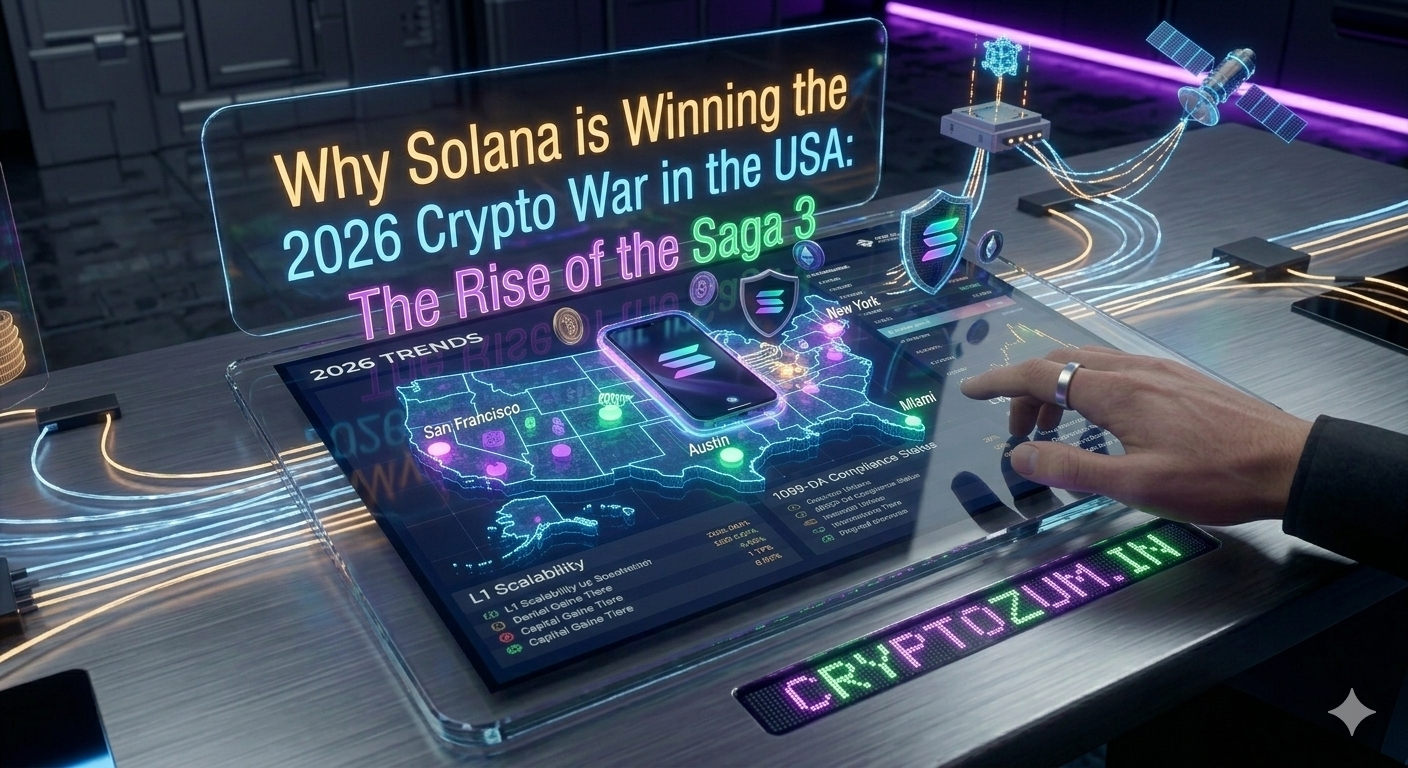
For years, the debate in the United States was always “Bitcoin vs. Ethereum.” But as we move through 2026, a third contender has not just joined the race—it’s leading the retail charge. Solana ($SOL$) has transformed from a high-speed blockchain into a consumer electronics and lifestyle brand, primarily driven by its mobile-first strategy in the US market.
1. The Saga 3: The iPhone of the Crypto World?
The launch of the Solana Saga 3 in early 2026 has been a turning point for mobile crypto adoption. Unlike traditional smartphones, the Saga 3 is built with a “Seed Vault” integrated at the hardware level, making it virtually impossible for malicious apps to steal private keys.
- DApp Store vs. Apple/Google: US developers are flocking to the Solana DApp Store because it takes 0% commission, compared to the 30% “Apple Tax.”
- Airdrop Culture: For many American users, the phone “pays for itself” through exclusive token airdrops available only to Saga 3 hardware owners.
2. Speed and Cost: The Retail Advantage
In a fast-paced economy like the USA, nobody wants to wait 10 minutes for a transaction to clear or pay $50 in gas fees.
- Firedancer Upgrade: With the full rollout of the Firedancer validator client in 2026, Solana now handles over 1 million transactions per second (TPS).
- US Retail Payments: Major US retailers like Shopify and several fast-food chains have integrated Solana Pay. This allows customers to pay with $USDC$ instantly for a fraction of a cent in fees, bypassing traditional credit card networks.
3. The “DePIN” Hub: Solana’s Physical Network in the US
Solana has become the preferred chain for Decentralized Physical Infrastructure (DePIN) projects in America.
- Helium Mobile: Thousands of US citizens are now using Helium (on Solana) for their 5G cellular service, earning $MOBILE$ tokens just by providing coverage or using the network.
- Hivemapper: US drivers are mapping the nation’s roads using Solana-based dashcams and earning $HONEY$ tokens, creating a decentralized competitor to Google Maps.
4. Institutional Trust: The Solana ETF Impact
The approval of the Spot Solana ETF by the SEC in late 2025 has brought billions of dollars from US pension funds and 401(k)s into the ecosystem.
- Wall Street’s Choice: Institutions prefer Solana for its “Parallel Execution” capabilities, which mimic the efficiency of high-frequency trading systems used on the NASDAQ.
5. Security Concerns: Is Solana “Too Centralized” for Americans?
Despite its success, the debate around centralization persists in US crypto circles.
- Uptime Record: In 2026, Solana has maintained a 99.99% uptime, silencing critics who pointed to past outages.
- Validator Distribution: With over 3,000 validators worldwide (many based in green-energy data centers in the US), the network is more decentralized than ever.
Conclusion: The Future is Solana
For the average American investor, Solana offers what Ethereum currently lacks: Simplicity, Speed, and a Physical Connection (Mobile). As we look ahead at the rest of 2026, Solana isn’t just a “blockchain”—it’s the operating system for the next generation of the internet.